



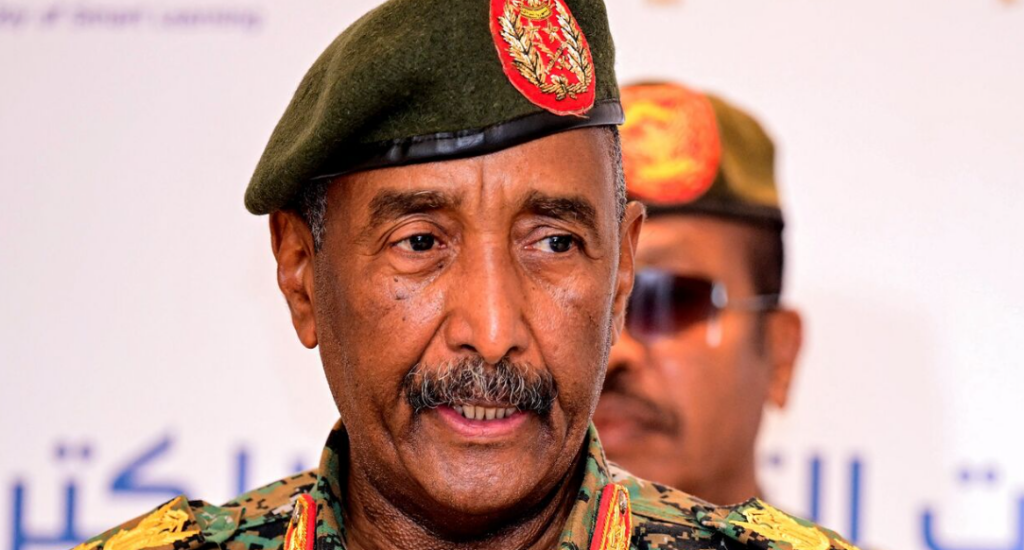
Sudan’s military leader, Gen. Abdel Fattah al-Burhan, has said there will be no peace negotiations with the paramilitary Rapid Support Forces (RSF) unless the group lays down its weapons and dismantles its forces.
Speaking on Friday at the Sheikh Abu Qaroon religious centre east of the capital, Khartoum, Burhan said the military would reject any political settlement that did not require the RSF to disarm.
He said there was “no middle-ground solution” to the conflict and insisted the war must end with the complete defeat of the RSF across Sudan.
Burhan warned that if the army and the Sudanese people failed to achieve a decisive victory, the RSF would return to the political arena and continue committing abuses.
The army chief also dismissed calls from some civilian politicians for reforms to the armed forces, including proposals to restructure the military. He said such matters should not be decided by political groups.
Burhan said the army’s gradual military campaign was making progress, pointing to what he described as the expulsion of RSF fighters from parts of Al-Gazira, White Nile and Khartoum states.
He pledged that government forces would also regain control of the Darfur and Kordofan regions, where fighting continues.
He also criticised people who have declared neutrality in the conflict, accusing them of failing to condemn attacks that he said the RSF had carried out against civilians and vital infrastructure, including electricity and water facilities in El Obeid.
The RSF has not immediately responded to Burhan’s latest remarks.
Sudan has been at war since April 2023, when a power struggle between the Sudanese Armed Forces and the RSF erupted into open conflict. The fighting has devastated large parts of the country, displaced millions of people and created what the United Nations describes as one of the world’s worst humanitarian crises.

 and then