



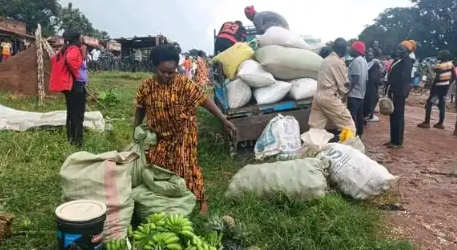
Retailers in Yei River County say rising taxes and transportation costs are cutting into their profits, forcing some businesses to close as the cost of goods continues to rise.
Speaking to Radio Tamazuj over the weekend, Joyce Kadi, a retailer dealing in onions, tomatoes and beans at Dar El Salaam Main Market, said multiple taxes were reducing her daily earnings and limiting business expansion.
“Every day they charge us highly even though you have few goods; they don’t understand, and they always don’t care about the charges they levy on us. If they say SSP 10,000, you must pay,” she lamented. “My message is we are suffering. For us who are widows, we are keeping these small businesses to survive, but in the end we don’t realize any profit due to the high charges.”
Another trader, Oliver Laku, who sells maize and cassava flour, called on authorities at all levels of government to reduce taxes, saying the combined burden of taxation and transportation costs was hurting small businesses.
“Prices of items are going high because the roads are bad, and maize is also going to get finished. Farmers also suffered crop losses due to prolonged drought this season. Sometimes when we go to the rural markets like in Mugwo, the roads are bad, vehicles get stuck, and that is why we traders also hike prices. When we buy something for SSP 25,000, we come here and sell at 30,000 per basin so that we can get a small profit, which is not enough because there are high taxes levied on us.”
Meanwhile, Tabu Na Moro, a trader, said rising transportation costs from rural markets had forced traders to increase commodity prices.
“We buy maize from the Mugwo market sometimes at SSP 23, 000 per basin, and we sell at 30,000. Transportation of one sack of maize is 40,000. We buy cassava flour at 20,000, and we sell at 28,000 a bucket,” he explained. Transportation is expensive, and with all the additional taxes, we realize small profits.”
Yei Chamber of Commerce, Industry and Agriculture Chairman Justin Luate Rafael acknowledged the challenges facing traders, including multiple taxes and checkpoints, and urged the government to address the barriers affecting businesses, warning that economic development would remain difficult without a supportive business environment.
“The first thing is the conditions of the roads, which are bad; secondly, insecurity along the roads where rebels or bandits get involved, and the third thing is the issue of the multiple roadblocks where anyone can demand money,” he said. “For this country to go ahead, we want the government to work on the issues of the high taxes and illegal roadblocks which are hindering the development of businesses in the country.”

 and then