



A faction of the opposition SPLM-IO on Friday rejected President Salva Kiir’s plan to hold elections in December, saying constitutional changes pushed through by the government were intended to remove key safeguards in the 2018 peace agreement and could deepen the country’s political crisis.
The SPLM-IO, led by detained First Vice President Dr. Riek Machar, said the government was using constitutional amendments to clear the way for a Dec. 22 election without completing a national census, adopting a permanent constitution or fully implementing security arrangements required under the Revitalized Agreement on the Resolution of the Conflict in South Sudan (R-ARCSS).
The government’s decision to proceed with the elections has drawn concern from peace monitors and other stakeholders. Parliament approved amendments in July removing the census and permanent constitution as prerequisites for the vote, while the Reconstituted Joint Monitoring and Evaluation Commission (RJMEC) has warned that changes to the peace agreement risk undermining its legal foundation.
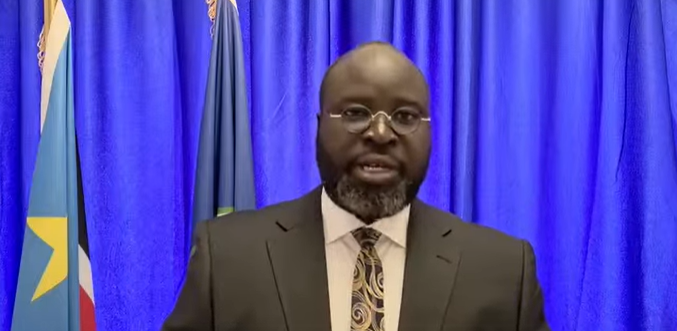
The opposition group’s statement, signed by its acting chairman, Oyet Nathaniel Pierino, accused President Kiir of seeking to “legalize” violations of the 2018 peace agreement through a new constitutional amendment bill recently tabled in parliament.
The SPLM-IO faction said large parts of the country remain affected by fighting, displacement and insecurity and that holding a vote under such conditions would prevent many citizens from participating.
It said its forces control areas in parts of Equatoria, Upper Nile, Jonglei and Unity states.
The SPLM-IO accused Kiir of repeatedly delaying or selectively implementing the 2018 peace agreement, including provisions on security-sector reform, transitional justice, political space and the drafting of a permanent constitution.
It also accused government forces of violating the ceasefire and attacking opposition cantonments and training centres. The government has previously denied such accusations. The SPLM-IO said Machar’s detention and prosecution had further undermined the peace process.
Elections held outside the framework of the peace agreement would not bring the transition to a legitimate end because the political and security conditions for a national vote had not been established, the SPLM-IO said.
It accused Kiir’s ruling Sudan People’s Liberation Movement (SPLM) of seeking to use the elections to retain power and said the vote could produce a government without the participation of large sections of the population.
The accusations come as election preparations move forward despite unresolved questions over the legal framework, security, funding and political participation. RJMEC has warned of restrictions on civic and political space, insecurity, displacement and uncertainty over the inclusivity of the electoral process.
The government says elections are necessary to end the prolonged transition. The presidency has described the constitutional amendments as part of efforts to pave the way for the December 2026 vote.
In its statement, the SPLM-IO said it had invoked Article 4 of the Transitional Constitution, which concerns the defence of the constitution.
It accused the government of running a “dictatorial” and “monolithic” system and said its political structures, civil administrations and armed forces would determine a way forward to restore peace and establish a federal system of government.
The SPLM-IO called on its supporters and citizens to resist what it described as Kiir’s government and to publicise what it considers violations of the 2018 peace agreement.
The SPLM-IO is a principal signatory to the 2018 R-ARCSS, which established the transitional unity government in 2020. Machar was suspended and detained in March 2025 and is being tried by a special court in Juba over allegations linked to fighting in Nasir.
His detention triggered a split within the SPLM-IO. A faction based in Juba is led by Peacebuilding Minister Stephen Par Kuol, while another faction operating largely from exile, with military support and control of some areas in South Sudan, is headed by Oyet Nathaniel Pierino, the party’s deputy chairman.
The Juba-based faction led by Par supports elections and is recognised by President Kiir as a legitimate partner in the implementation of the fragile 2018 peace agreement.

 and then