



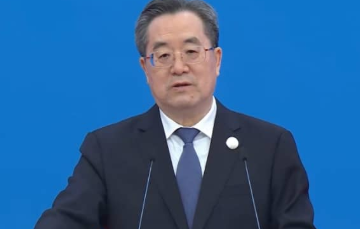
The Government of China last week pledged to open its domestic market to international businesses as it defended its trade policies at the opening of the ninth China International Import Expo in Shanghai, amid concerns over its growing trade surplus.
Chinese Vice Premier Ding Xuexiang said Beijing remains committed to international trade and would continue expanding imports, rejecting criticism that China’s industrial development was hurting other economies.
“China has never deliberately pursued a trade surplus,” Ding said, calling for greater international cooperation to address global economic imbalances.
He dismissed what he described as attempts by some institutions and media outlets to promote a “China squeeze” theory, saying China’s development created opportunities for other countries.
Ding said China’s average tariff rate had fallen to 7.3 percent and pledged to expand imports of quality goods and services.
He also called for greater cooperation in artificial intelligence, digital technology, green development and advanced manufacturing.
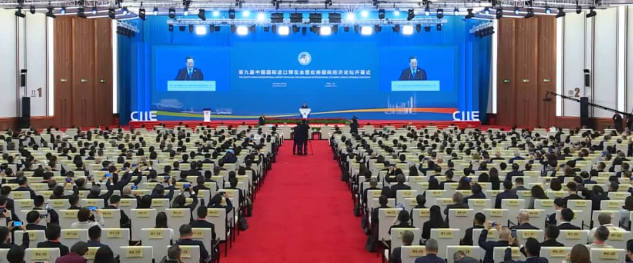
The appeal comes as China’s trade surplus reached a record $1.2 trillion in 2025 and is on course to surpass that figure this year.
Exports grew 6.7 percent in the first 10 months of 2026, while imports increased by 3.7 percent, according to Reuters, highlighting the gap between China’s export growth and domestic demand.
The trade imbalance has drawn criticism from major trading partners, including the European Union, over competition, market access and the impact of Chinese exports on domestic industries.
Austria’s Federal Chancellor Christian Stocker, addressing the same ceremony, welcomed continued economic engagement with China but called for fair competition and equal opportunities for businesses.
“Europe does not seek isolation. We seek engagement while also ensuring that our economic resilience and industrial capabilities remain strong,” Stocker said.
He said China was Austria’s most important trading partner in Asia and its third largest worldwide, with more than 650 Austrian companies operating in the Chinese market.
Stocker said the 55th anniversary of diplomatic relations between Austria and China this year provided an opportunity to deepen economic cooperation, particularly in future technologies.
But he stressed that differences between trading partners should be addressed through dialogue.
“Trust is not built by overlooking difficulties, but by addressing them through dialogue,” he said.
Gabonese President Brice Clotaire Oligui Nguema used the expo to invite Chinese businesses to invest in his country’s mining, agriculture, energy and infrastructure sectors.
“Come and invest in Gabon and build with us the new edifice of our dreams,” he told delegates.
He said Gabon was seeking to transform its economy by processing more of its raw materials locally, developing domestic industries and creating employment for young people.
“Right now, our country is undergoing a historic paradigm shift by focusing on the local processing of our raw materials,” he said.
Oligui Nguema highlighted opportunities in timber, manganese, iron ore, oil, gas, uranium and gold, as well as agriculture, renewable energy and digital infrastructure.
He invited Chinese companies to invest in Gabon’s Nkok Special Economic Zone, where he said investors would benefit from tax incentives.
The president also welcomed China’s zero-tariff treatment for African countries, saying the policy could strengthen trade and economic cooperation.
He said Gabon offered investors five million hectares of arable land and opportunities in carbon credits, renewable energy and local medicine.
The ninth China International Import Expo runs from November 5 to 10 and has attracted 4,142 overseas exhibitors from 162 countries, regions and international organisations, according to organisers.
More than 480 products and technologies are making their global, Asian or Chinese debuts at the exhibition, which covers agriculture, consumer goods, automobiles, medical equipment, technology and trade in services.
Launched in 2018, the expo is a flagship Chinese initiative aimed at encouraging imports and giving foreign businesses greater access to the country’s domestic market.

 and then